
A Practical Guide for Fitness Centers Considering an AI Body Analyzer
When introducing a new technology into a fitness or Pilates facility, one of the most common concerns from clients is surprisingly simple:
“Do I need to take off my clothes for posture measurement?”
This question directly impacts user experience, adoption rate, and ultimately, your business performance.
If the process feels uncomfortable or inconvenient, clients are less likely to engage—even if the technology itself is highly advanced.
In this article, we’ll break down how modern systems like Bodydot, an AI Body Analyzer, approach this issue—and why it matters for your facility.
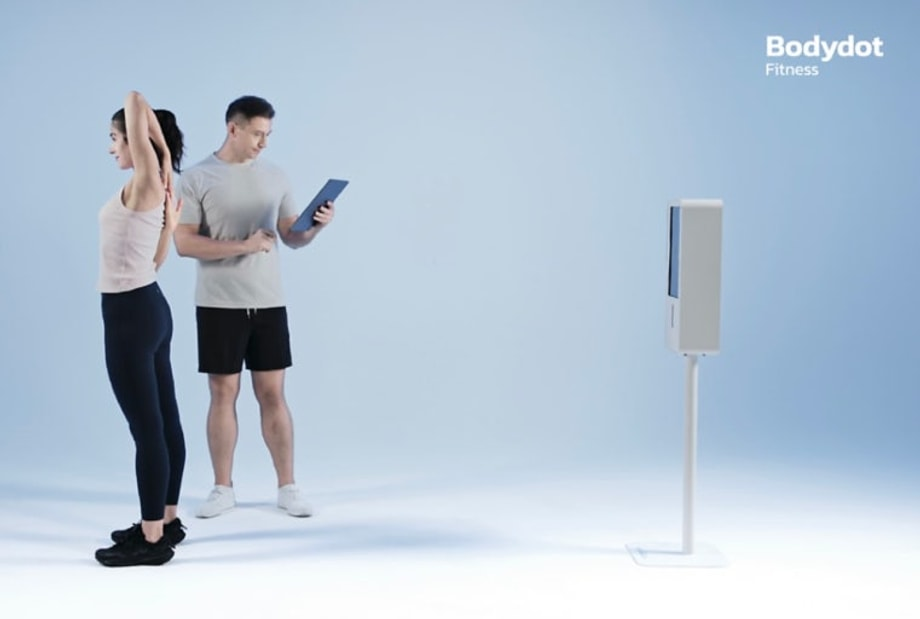
Why Clothing Matters in Posture Analysis
Traditional posture assessment methods often rely heavily on visual inspection or manual measurements.
In many cases, practitioners prefer clients to wear minimal or tight-fitting clothing to clearly observe anatomical landmarks.
While this may improve visibility, it introduces several challenges:
- Client discomfort or reluctance
- Privacy concerns
- Operational inefficiencies in busy facilities
For commercial environments—especially gyms, Pilates studios, and wellness centers—this creates friction in the customer journey.
The Shift Toward AI-Based Body Analysis
With the emergence of AI Body Analyzer solutions, posture assessment is no longer limited by manual observation.
Systems like Bodydot use AI and 3D camera technology to capture and analyze body alignment, balance, and posture in a matter of seconds.
This allows facilities to move from subjective evaluation to data-driven consultation, improving both accuracy and communication with clients.
Do Clients Need to Undress? The Short Answer: No
One of the key advantages of Bodydot is its usability in real-world environments.

- Clients do not need to undress completely
- Normal workout clothing is generally sufficient
- Only bulky items (e.g., padded jackets) should be avoided
Tight-fitting clothing can enhance precision, but the system is designed to deliver reliable results even with everyday attire.
This is a critical distinction compared to traditional assessment methods.
Why This Matters for Distributors and Facility Owners
From a business perspective, this seemingly small detail has a significant impact.
1. Higher User Acceptance
Clients are far more willing to try a posture scan when it doesn’t require changing clothes.
This lowers the psychological barrier to entry.
2. Faster Operational Flow
With no need for changing rooms or preparation time, scans can be completed quickly—often within minutes.
This is especially valuable in high-traffic facilities.
3. Scalable Service Model
Because the process is simple and standardized, it can be easily integrated into:
- Gym onboarding sessions
- Pilates assessments
- Corporate wellness programs
4. Improved Sales Conversion
When posture data is presented visually and immediately, it becomes easier for trainers to recommend personalized programs—supporting higher PT conversion and retention.
From “Inconvenient Assessment” to “Seamless Experience”
The real innovation of an AI Body Analyzer like Bodydot is not just in accuracy—it’s in usability.
By removing friction from the measurement process, facilities can:
- Increase participation rates
- Deliver consistent assessments
- Build stronger trust with clients
In today’s competitive fitness field, experience matters just as much as technology.