.png)
What Does Bodydot Measure?
Body Data You Can Understand Through AI Body Analysis
When people hear the term “body analysis,” they often think it simply means checking whether someone has good or bad posture.
However, in real fitness, Pilates, and rehabilitation settings, the more important question is not just whether the posture looks correct. The real value lies in helping clients understand their current body condition and connecting that information to the right exercise direction.
Bodydot is an AI Body Analyzer that uses a 3D sensor and AI technology to scan the body and analyze posture, body alignment, and physical imbalance with data.
Instead of relying only on visual observation, Bodydot provides objective information that can be used for member consultation, exercise planning, posture correction, and progress tracking.
For fitness centers, Pilates studios, and rehabilitation centers, this makes the consultation process clearer, more professional, and easier for clients to understand.
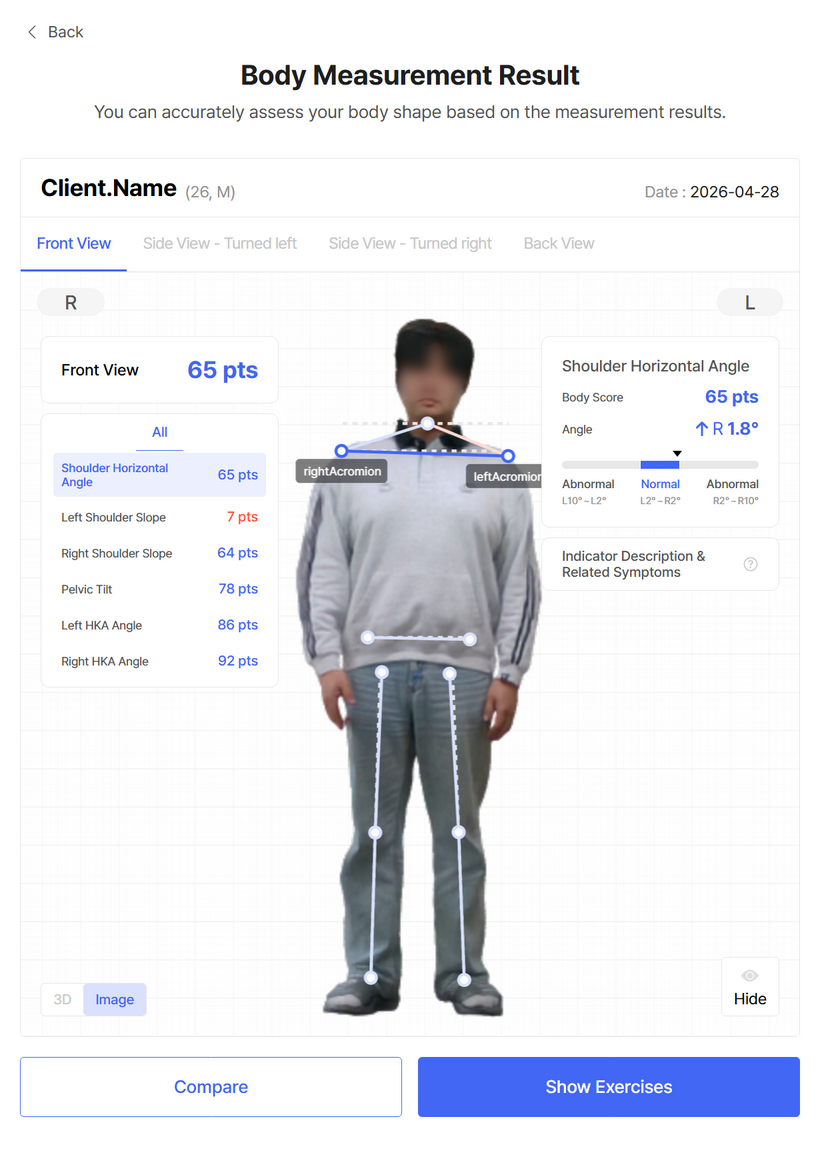
1. Bodydot Analyzes Overall Body Alignment
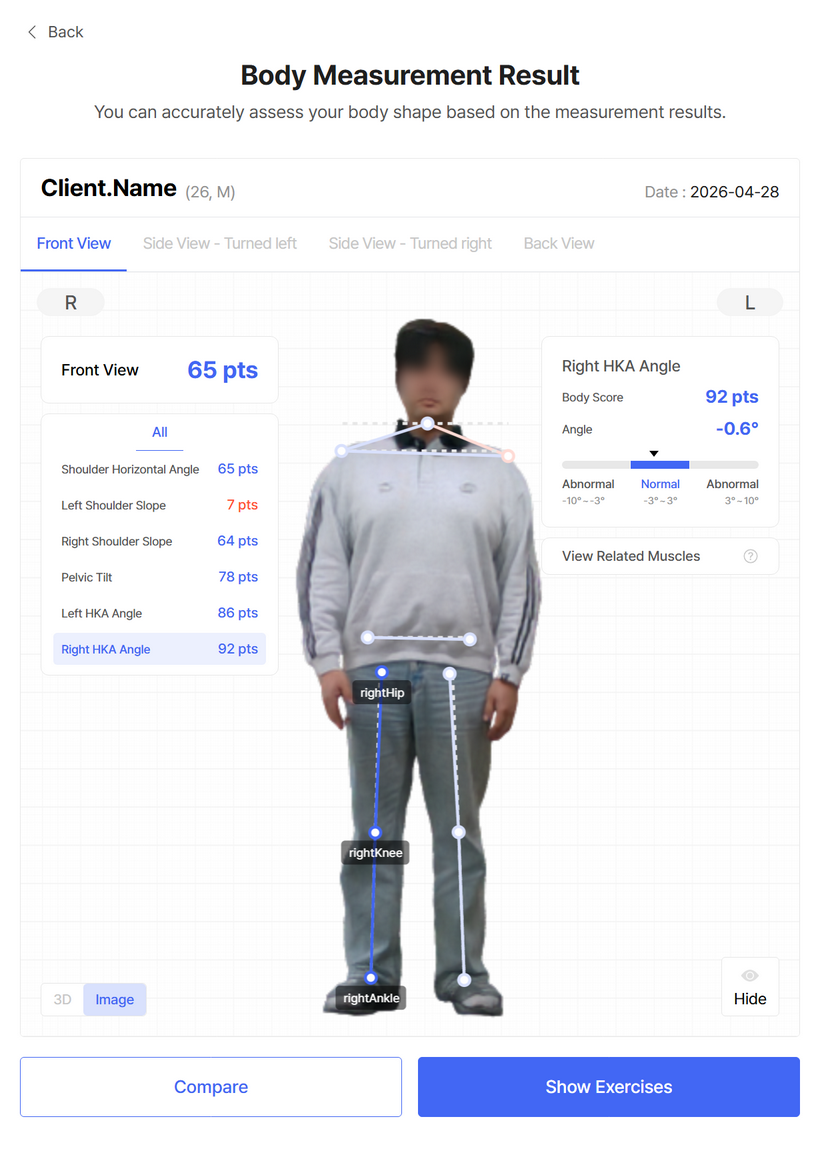
Bodydot measures the body from the front, side, and back to analyze overall posture and alignment.
Through this process, it can help identify whether the shoulders are tilted, whether the pelvis is uneven, or whether the head is positioned away from the body’s center line.
These are issues that many clients may not notice in their daily lives.
Instead of simply saying, “Your posture is unbalanced,” trainers and instructors can use Bodydot’s visual report and data to explain the client’s body condition more clearly.
This helps clients understand their posture more easily and makes the consultation more persuasive.
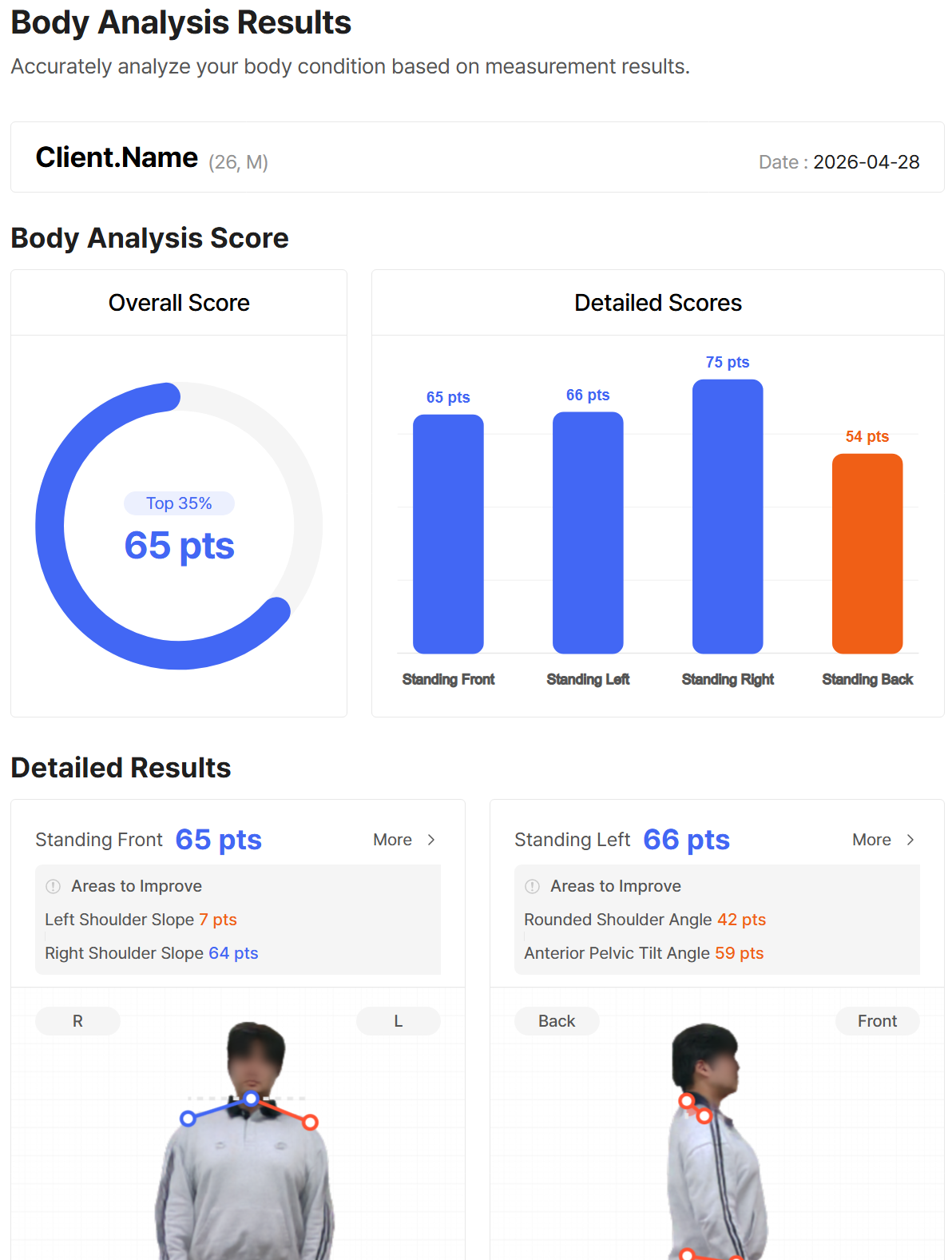
2. Shoulder and Pelvic Imbalance
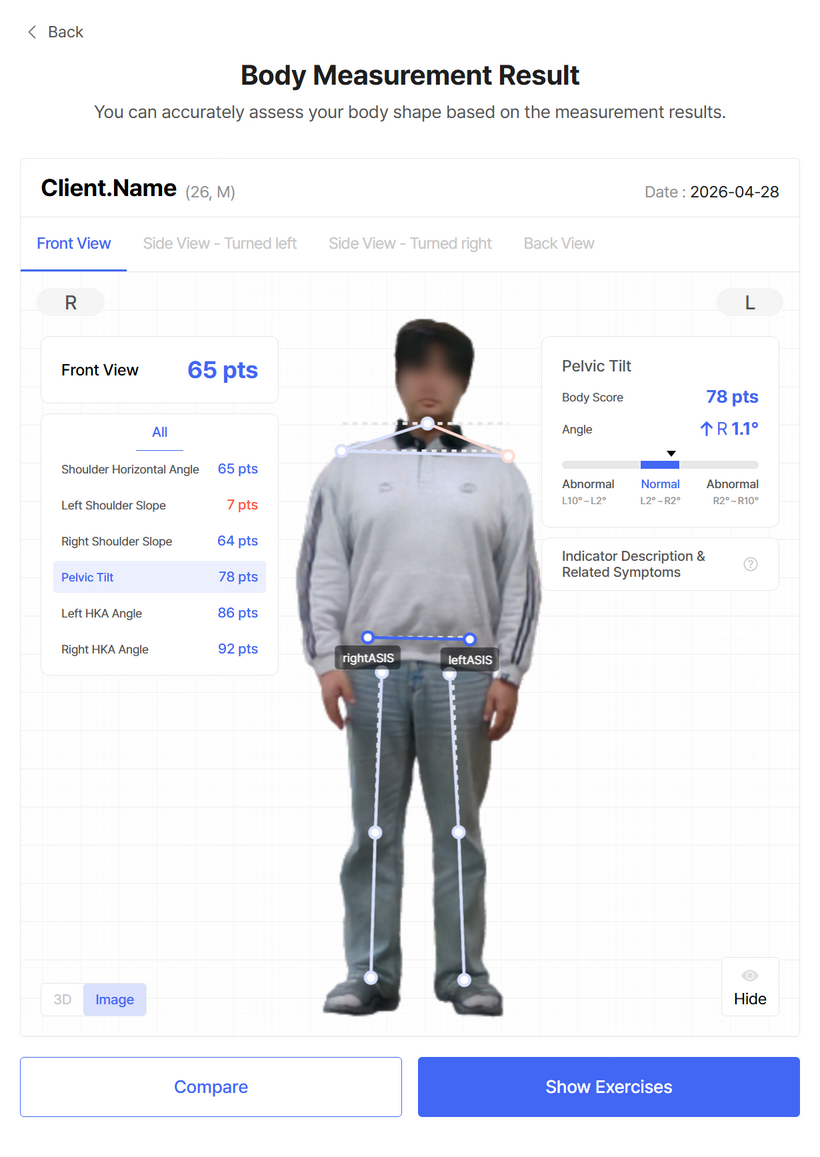
Shoulder and pelvic balance are two of the most common areas checked during posture and body alignment assessments.
Bodydot analyzes differences in shoulder height and pelvic tilt to help evaluate the balance between the upper and lower body.
For example, one shoulder may appear higher than the other, or the pelvis may be tilted to one side. These imbalances can be related to exercise posture, walking patterns, muscle usage habits, or daily lifestyle patterns.
By using this information, trainers and instructors can explain the client’s current body balance and set a more appropriate exercise direction.
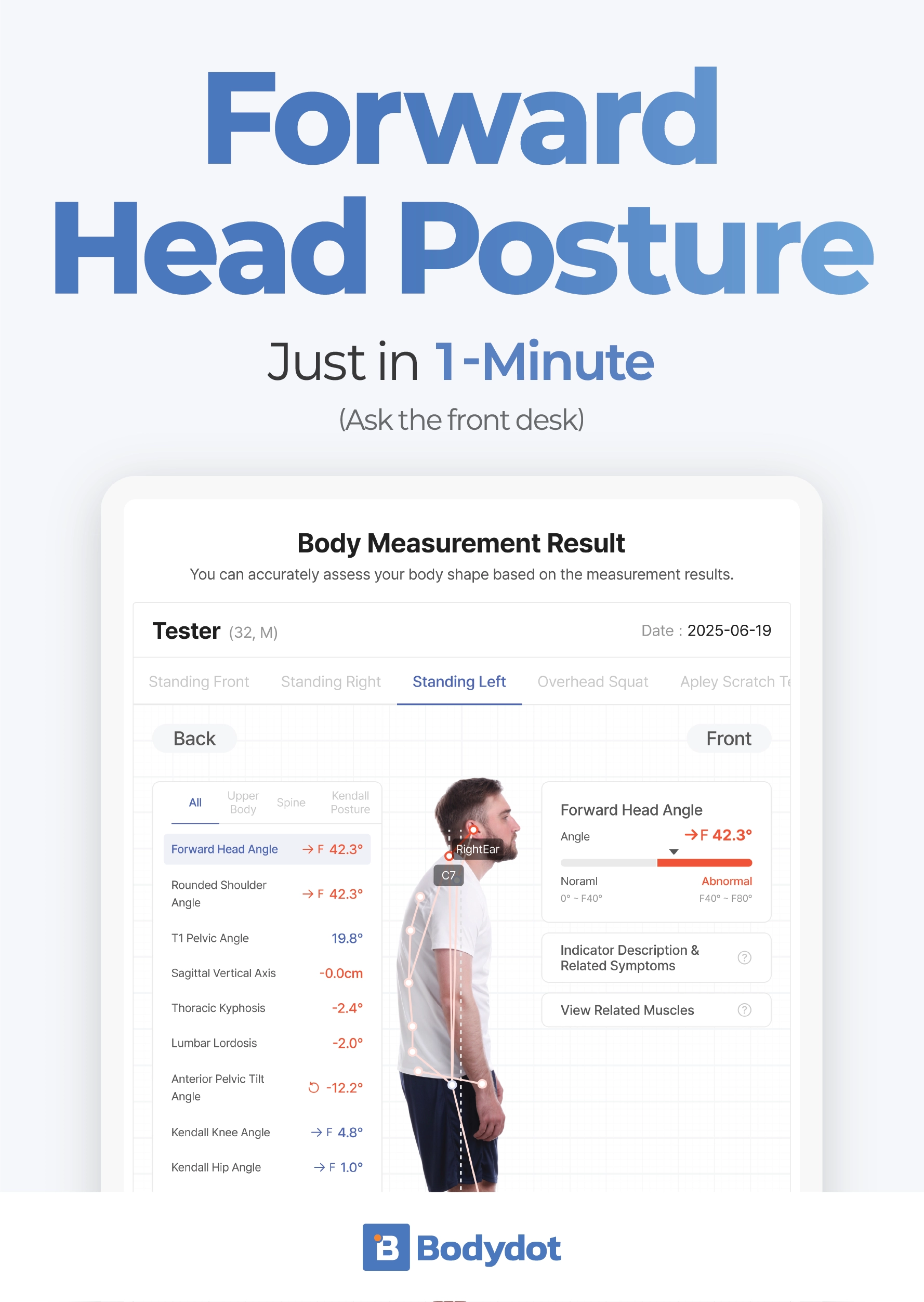
3. Forward Head Posture and Rounded Shoulders
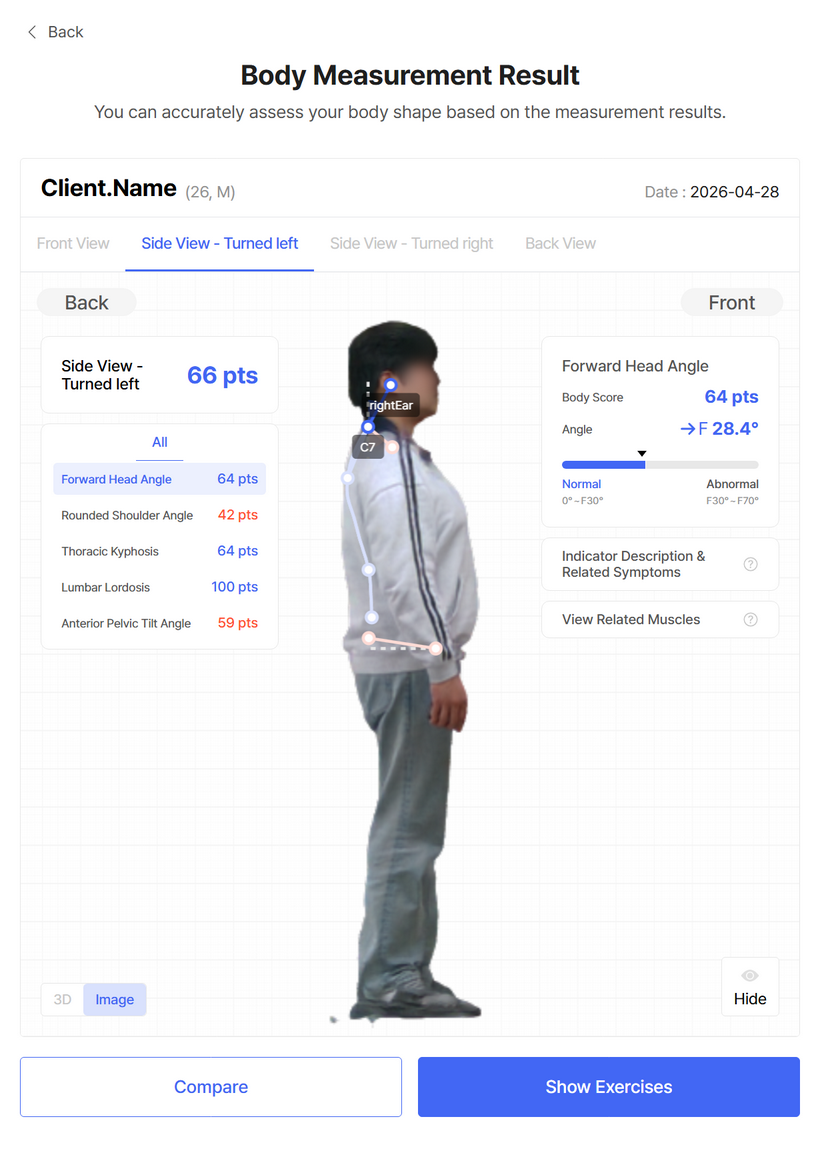
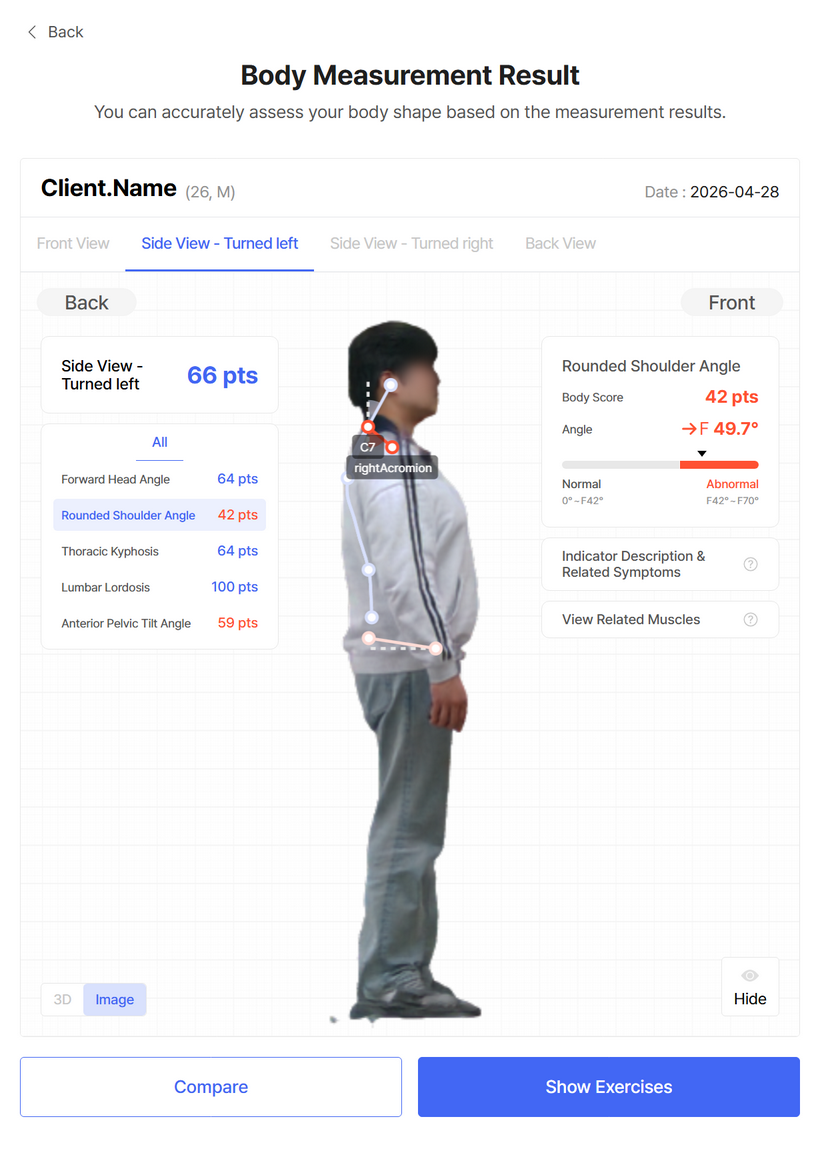
Neck and shoulder alignment problems are common among modern people.
Long hours of sitting, computer work, and smartphone use can contribute to forward head posture or rounded shoulders.
Bodydot analyzes the position of the head, neck, and upper body alignment to help explain posture issues such as forward head posture and rounded shoulders.
This is especially useful because many clients cannot easily see their own side posture.
When they check their Bodydot report, they can visually understand their current condition. This makes it easier for them to recognize the problem and understand why certain corrective exercises may be necessary.
4. Lower Body Alignment, Including O-Legs and X-Legs
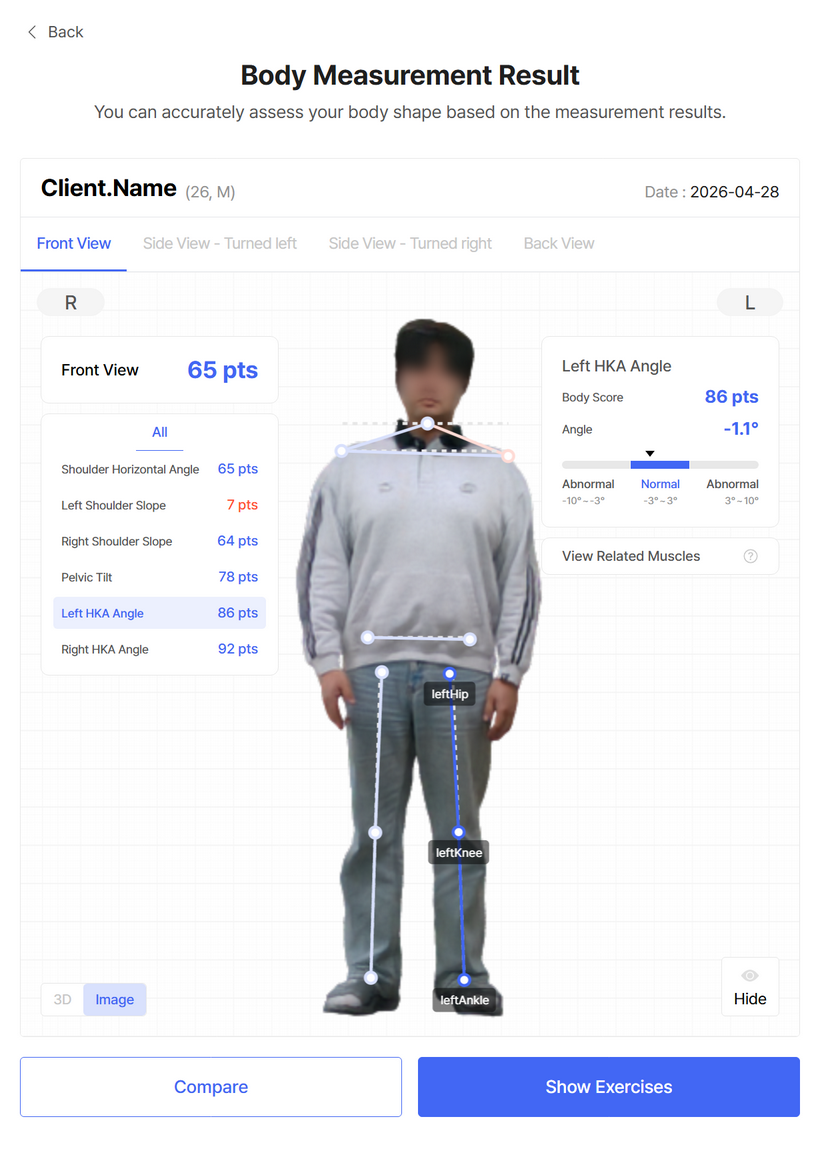
Lower body alignment is important for movement quality, exercise performance, and injury prevention.
Bodydot analyzes the alignment of the knees, ankles, and lower body to help evaluate whether the legs show signs of O-leg or X-leg alignment patterns.
This information can be useful when coaching exercises such as squats, lunges, walking patterns, and Pilates movements.
For example, if a client’s knees move inward during a squat, or if their lower body alignment is uneven, the instructor can use this data to explain why specific corrective movements are needed.
In this way, Bodydot helps connect body analysis data to actual exercise instruction.
5. Static Posture and Dynamic Movement Assessment
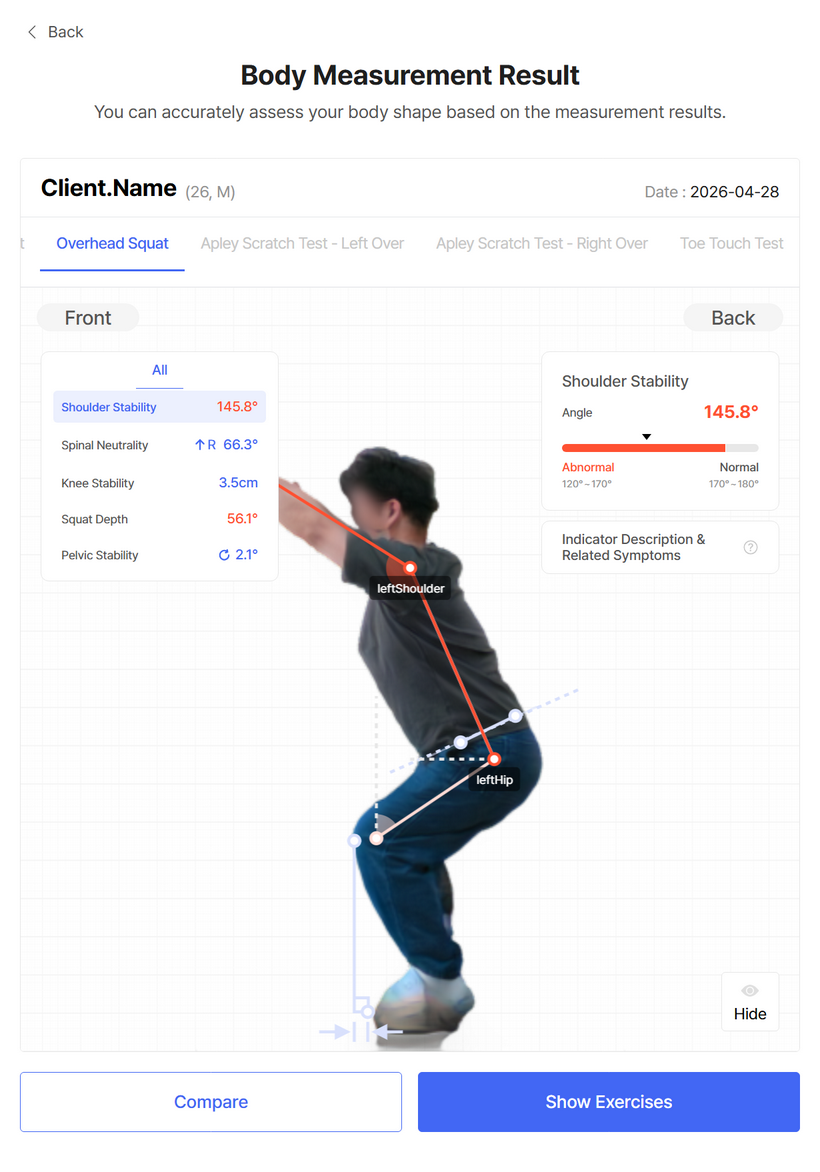
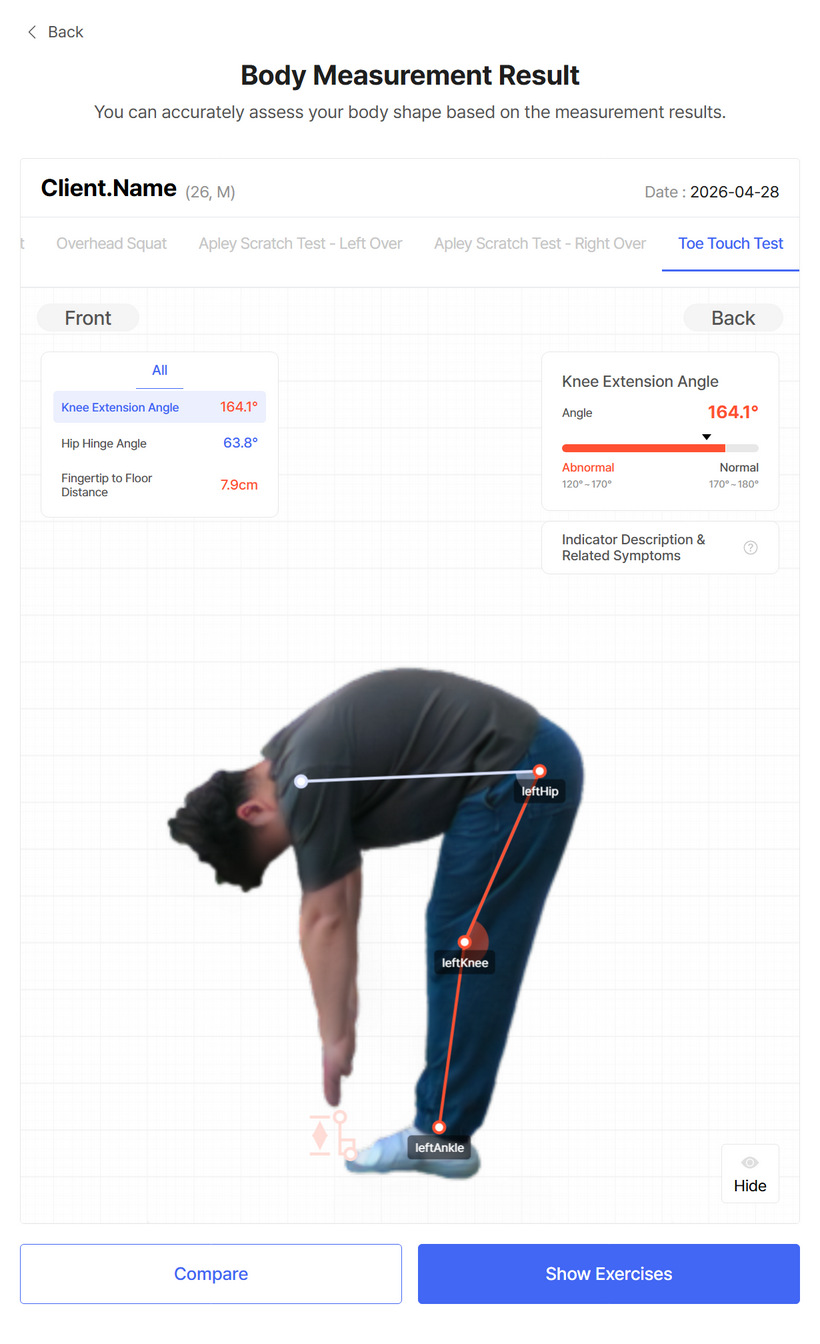
Bodydot is not limited to measuring a person standing still.
It can also be used for dynamic movement assessments, such as overhead squat analysis and shoulder flexibility tests.
Static posture analysis helps identify the client’s basic body alignment, while dynamic movement assessment helps evaluate how the body moves during specific actions.
For example, it can help check whether the knees collapse inward during a squat, whether shoulder mobility is limited, or whether there is a difference between the left and right sides during movement.
This makes Bodydot more than just a posture scanner.
It can be used as a tool to objectively assess both body structure and movement patterns.
6. Digital Management of Member Measurement Records
In center operations, one-time measurement is not enough.
What matters more is continuously tracking how a member’s body changes over time.
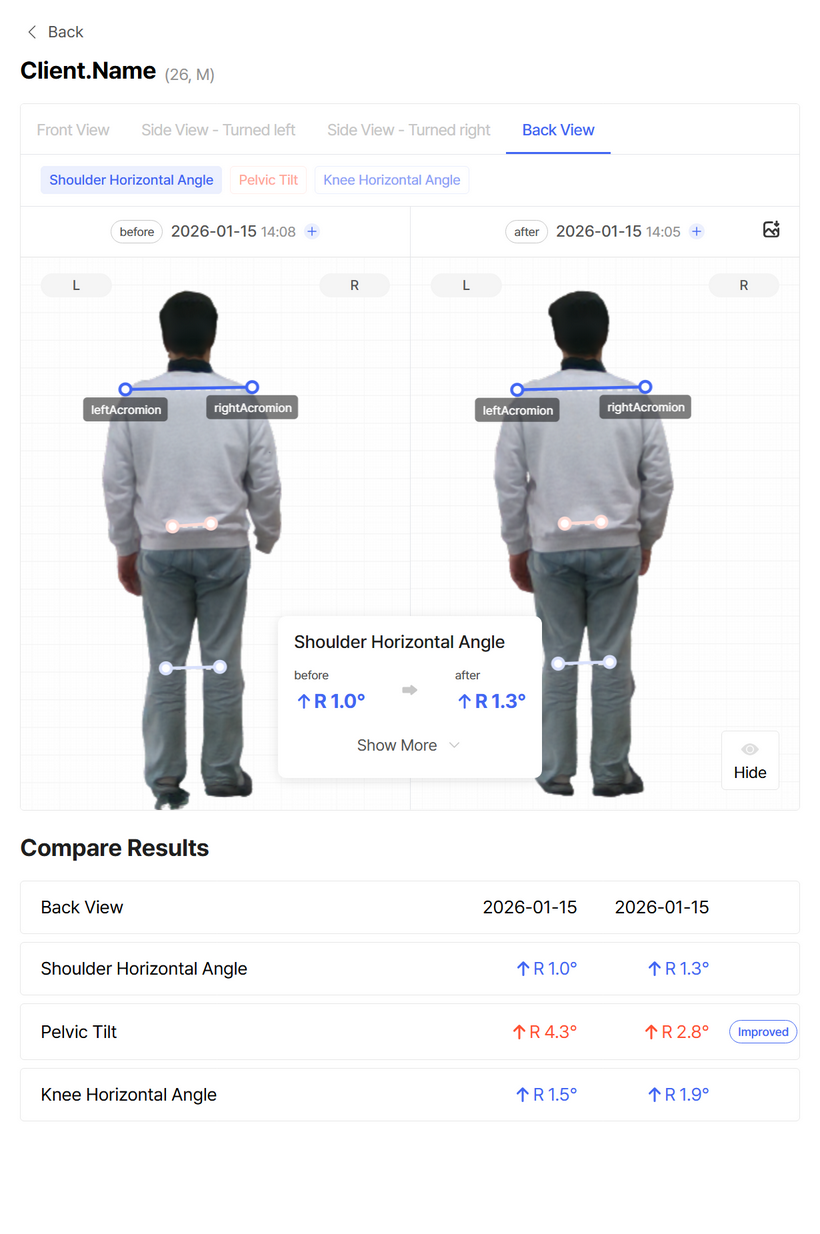
Bodydot allows centers to manage each member’s measurement history digitally.
For example, a trainer can compare the first assessment with follow-up measurements taken after 4 weeks or 8 weeks. This makes it easier to show the client how their body has changed over time.
For clients, seeing their progress visually can increase motivation.
For centers, these records can be used for re-consultation, program renewal, personal training proposals, or long-term member management.
7. Easy Report Sharing With Members
Bodydot does not limit the analysis result to the center.
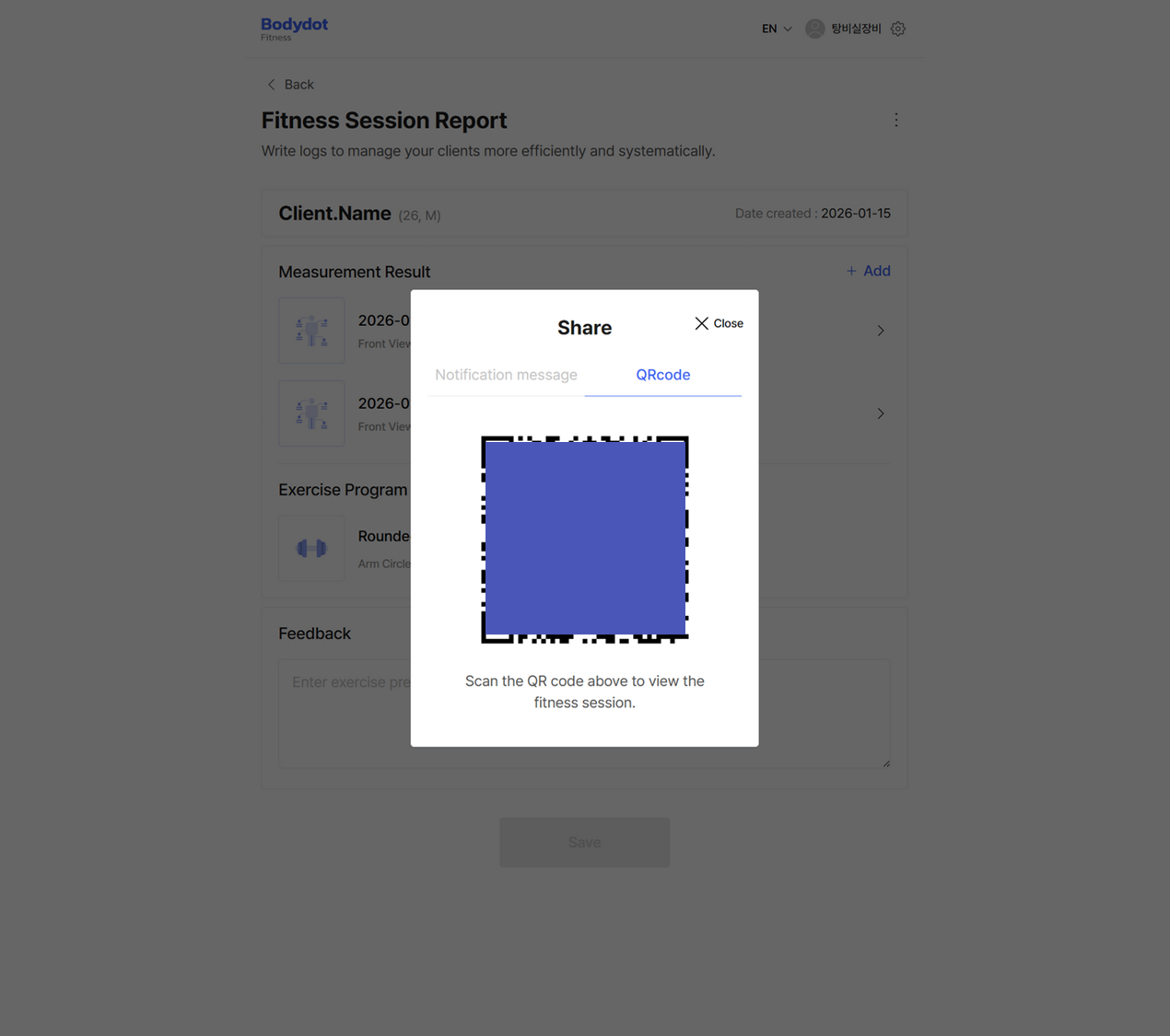
Members can access their results through a digital report, such as via QR code or mobile-based sharing.
This improves the client experience because members can review their body analysis report even after leaving the center.
They can check the explanation again at home, share it if needed, and better understand the exercise direction recommended by the trainer or instructor.
In this sense, the Bodydot report is not just a result sheet.
It becomes a communication tool between the center and the member.
8. Support for Personalized Exercise Program Design
The purpose of body analysis is not only to find problems.
The more important goal is to use the analysis results to guide the next step.
Bodydot can support personalized exercise planning based on each member’s posture, discomfort areas, body imbalance, and measurement results.
For example, a member with shoulder imbalance, a member with pelvic tilt, and a member with lower body alignment issues may all need different exercise strategies.
By using Bodydot’s data, trainers and instructors can explain the reason behind each exercise more clearly and provide a more personalized program.
This helps members understand not only what they need to do, but also why they need to do it.
9. Easier Communication Through 3D Modeling
In body analysis, professional knowledge is important.
But for the client, easy understanding is just as important.
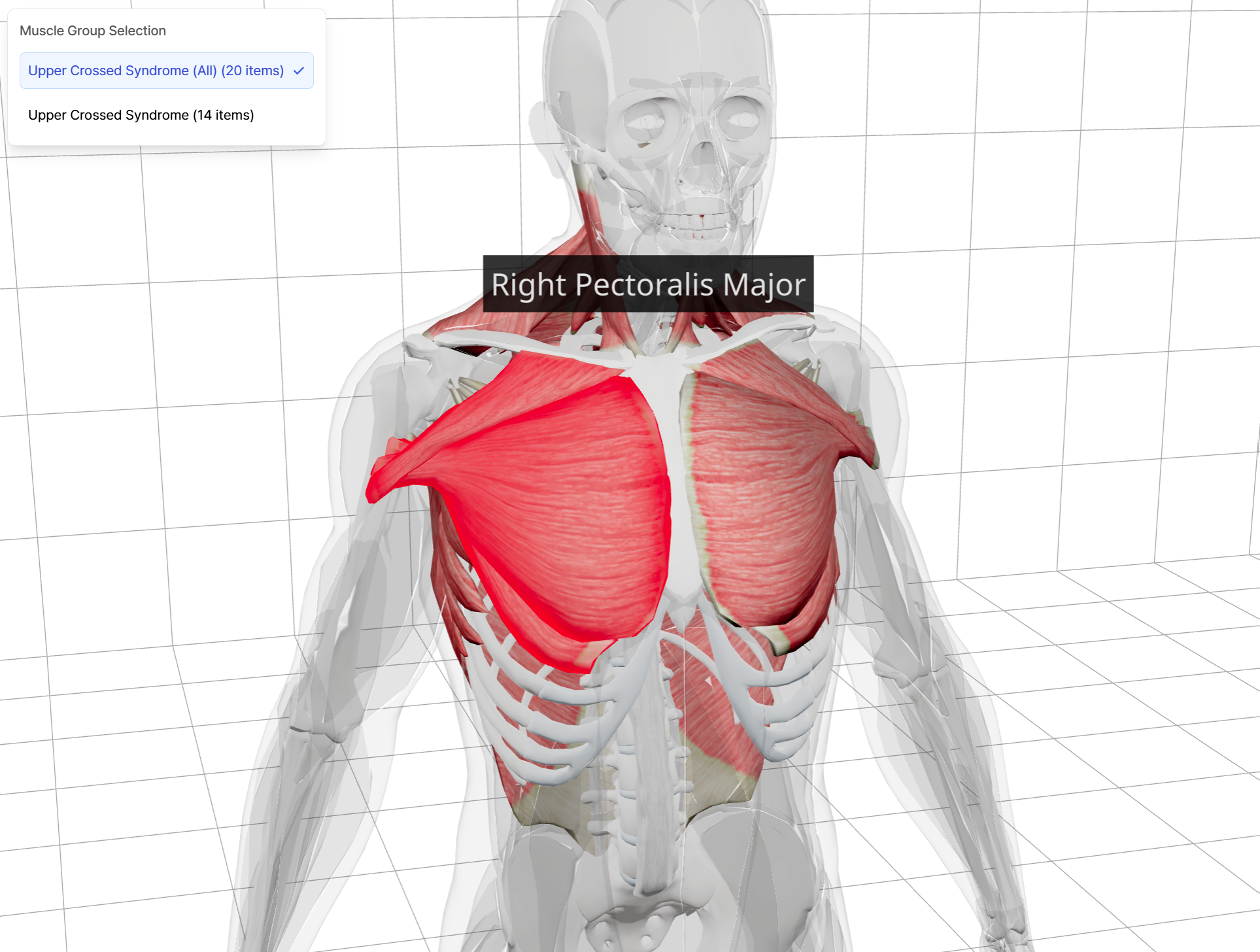
Bodydot uses 3D modeling to help visualize the client’s body condition. This allows trainers and instructors to explain posture and body alignment in a more intuitive way.
Instead of relying only on anatomical terms or verbal explanations, Bodydot helps show the client their condition through visual data and reports.
This makes the consultation more understandable and helps build trust between the center and the member.
10. Objective Data for Consultation and Sales
Consultation is a key part of running a fitness center, Pilates studio, or rehabilitation center.
However, if the consultation is based only on verbal explanation, clients may not fully understand their own body condition or the need for a program.
Bodydot provides objective data and visual reports that can support a more professional consultation.
Members can see their current condition more clearly, while centers can use the report to suggest the right exercise program, personal training session, Pilates plan, or follow-up management program.
This can be useful in many situations, including first consultations, trial sessions, membership renewal, and program recommendations.
Key Information Bodydot Provides
Category | Information Provided |
Body Alignment | Front, side, and back posture alignment |
Upper Body Balance | Shoulder height difference, neck position, upper body alignment |
Pelvic Balance | Pelvic tilt and left-right pelvic alignment |
Lower Body Alignment | Knee and ankle alignment, O-leg and X-leg patterns |
Posture Issues | Forward head posture, rounded shoulders, body imbalance |
Dynamic Movement | Overhead squat, shoulder flexibility, movement pattern analysis |
Progress Tracking | Measurement history and before-after comparison |
Report Sharing | Digital report sharing through QR code or mobile access |
Exercise Planning | Data-based support for personalized exercise programs |
Consultation Support | Objective data for member consultation and program sales |
Bodydot Is More Than a Measurement Device
The core value of Bodydot is not simply taking body measurements.
It analyzes the member’s body condition with data, provides the result as an easy-to-understand report, and helps centers use that information for consultation, exercise planning, and long-term member management.
In other words, Bodydot is an AI Body Analyzer that helps visualize posture, manage body changes, and improve the quality of member consultation.
For members, it provides a clearer way to understand their own body.
For centers, it provides a more professional and differentiated service experience.