.png)
The Problem with Traditional Body Analysis
For years, fitness professionals have worked with a familiar toolkit: a grid background, a camera, a printed sheet of posture angles, and — not too long ago — sticky adhesive markers placed on joints to track alignment.
These methods aren't without value. But they come with real limitations:
- Subjectivity: Results depend heavily on who is measuring and how consistently they apply the method.
- Limited scope: Most traditional approaches capture basic shoulder and pelvic tilt angles, missing the full picture.
- No digital continuity: Paper printouts can't be easily shared with members or tracked over time.
- High variability: Two trainers using the same method on the same client may reach different conclusions.
The result is a consultation that feels more like an approximation than a diagnosis.

How AI Body Analysis Changes the Equation
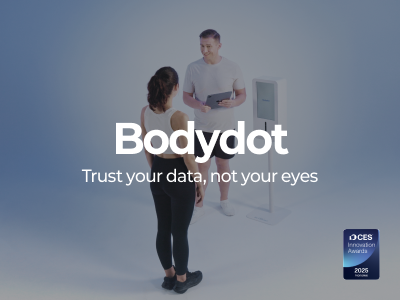
AI-powered body analyzers like Bodydot take a fundamentally different approach.
Instead of visual estimation, Bodydot uses a 3D depth camera combined with machine learning to automatically identify and quantify joint points, muscle distribution, and postural imbalances — without any physical contact.
In under 60 seconds, Bodydot delivers:
- 40 distinct measurement metrics — including joint angles, body alignment, limb length ratios, range of motion, and postural deviation scores
- 97.0% accuracy — validated on a proprietary AI model trained on 165,000+ real analysis sessions
- A fully digital, shareable report — accessible for in-person or remote consultations
- A 3D body simulation — showing members exactly what's happening with their posture and muscle balance
This isn't a smarter version of the old method. It's a different category of assessment entirely.
Side-by-Side: Traditional vs. AI Body Analysis
ㅤ | Traditional Method | Bodydot AI Analyzer |
Analysis basis | 2D photography, visual inspection | 3D scanning + machine learning |
Data output | Basic shoulder/pelvic angles | 40 comprehensive metrics |
Accuracy | Subjective, varies by operator | 97.0% validated accuracy |
Measurement time | 10–30 minutes | Under 60 seconds |
Physical contact | Often required (adhesive markers) | Contactless |
Report format | Paper printout | Digital, shareable online |
Remote use | Not possible | Fully supported |
Progress tracking | Manual comparison | Automated before/after data |
What This Means for Your Center
The difference between these two approaches isn't just technical — it's commercial.
When members can see their own body data in a clear, visual, 3D format, they understand their condition immediately. They don't have to take the trainer's word for it. And when they understand their problem, they're far more motivated to commit to a solution.
For fitness center owners and operators, this translates to:
- Higher OT-to-membership conversion rates — objective data builds trust faster than verbal explanation
- Stronger PT retention — members who see measurable progress stay longer
- Consistent consultation quality — every trainer delivers the same standard of assessment, regardless of experience level
- Online consultation capability — share detailed body reports with prospects before they ever visit in person
Bodydot is used in medical settings as well as fitness centers — a level of clinical credibility that adds real weight to your center's positioning.
Built on Science, Validated by the Industry
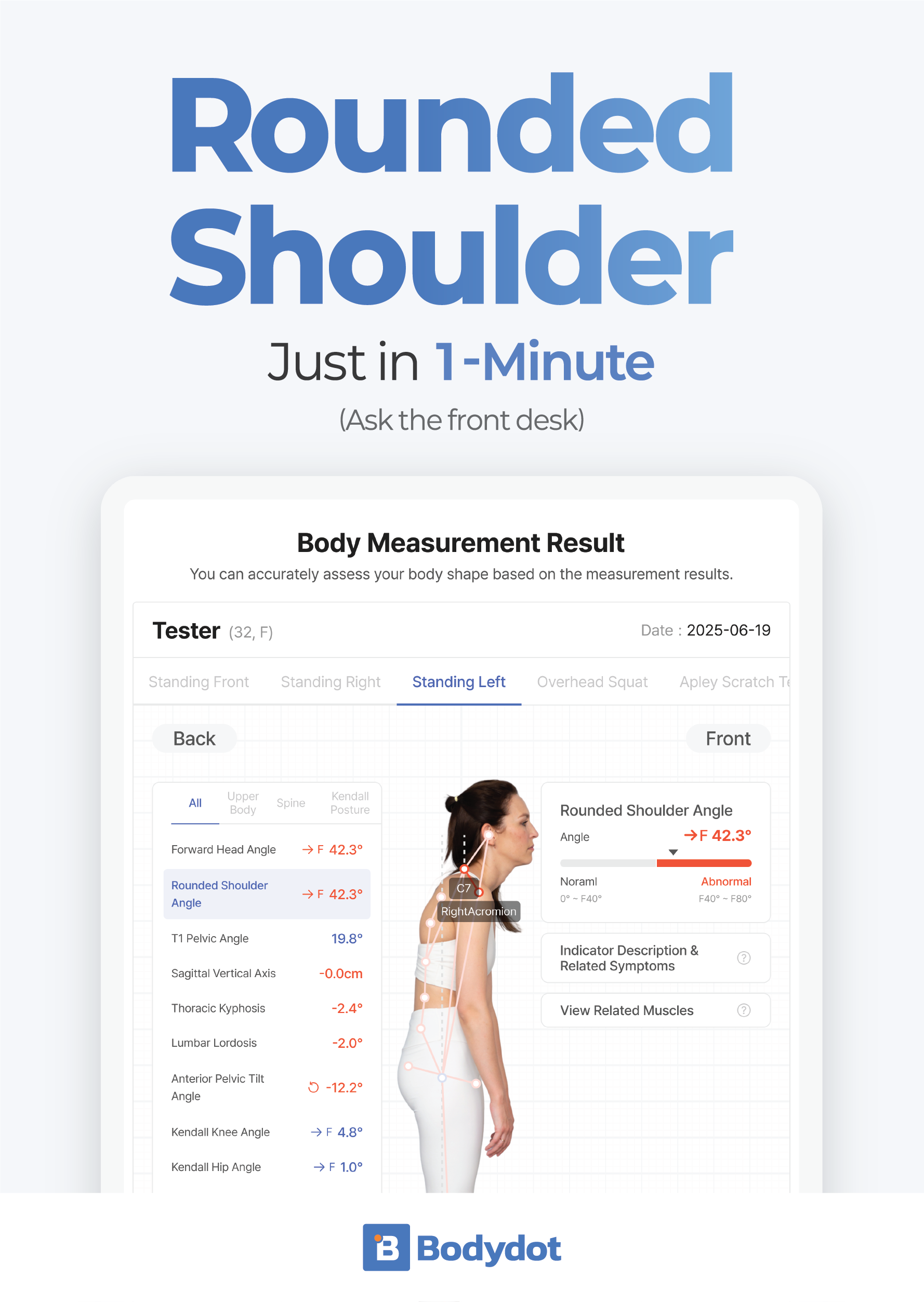
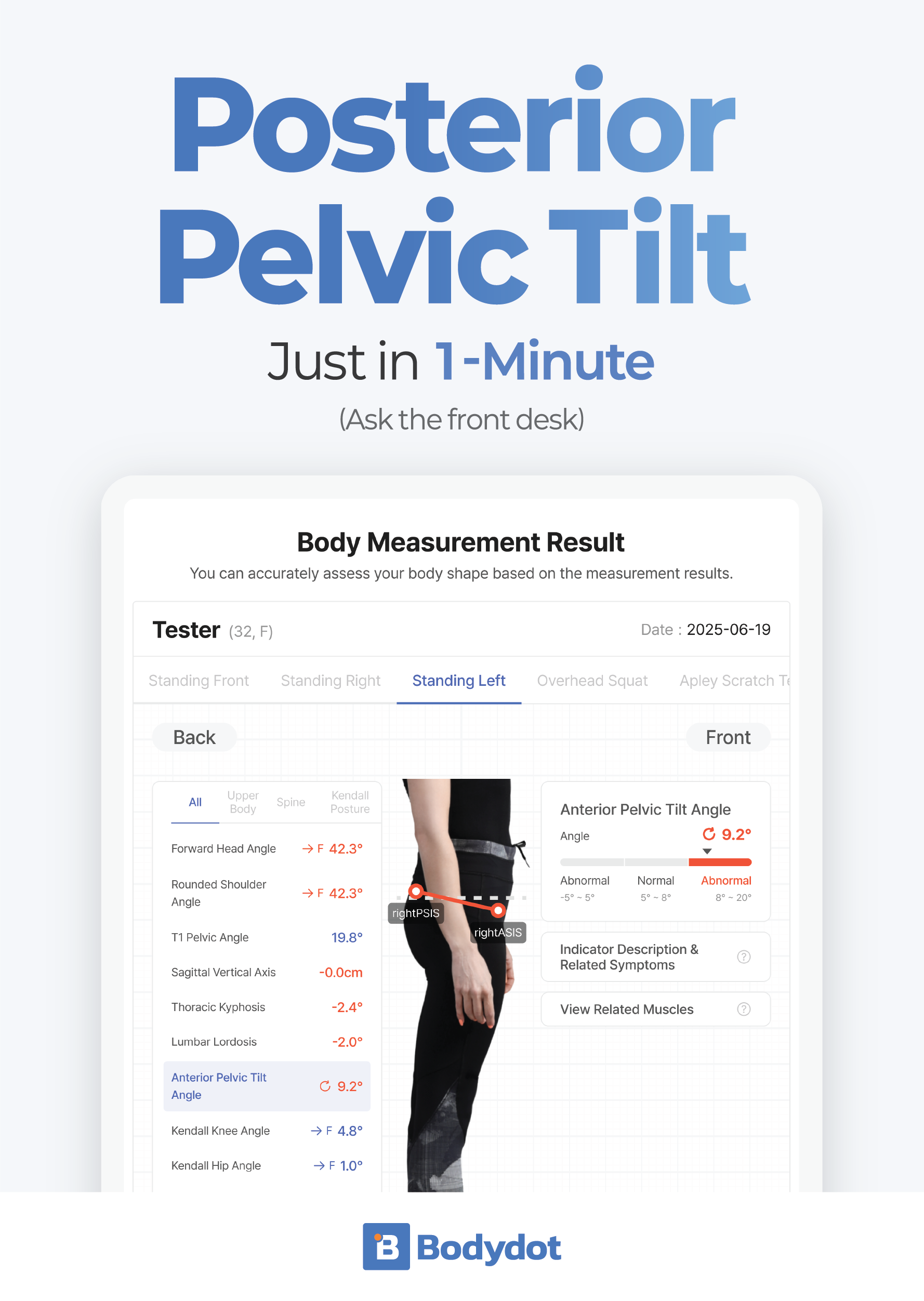
Bodydot's analysis methodology is grounded in peer-reviewed research, published in Diagnostics journal (DOI: 10.3390/diagnostics14040394), covering measurement approaches for shoulder horizontal angle, thoracic kyphosis angle, anterior pelvic tilt, and forward cervical inclination angle.
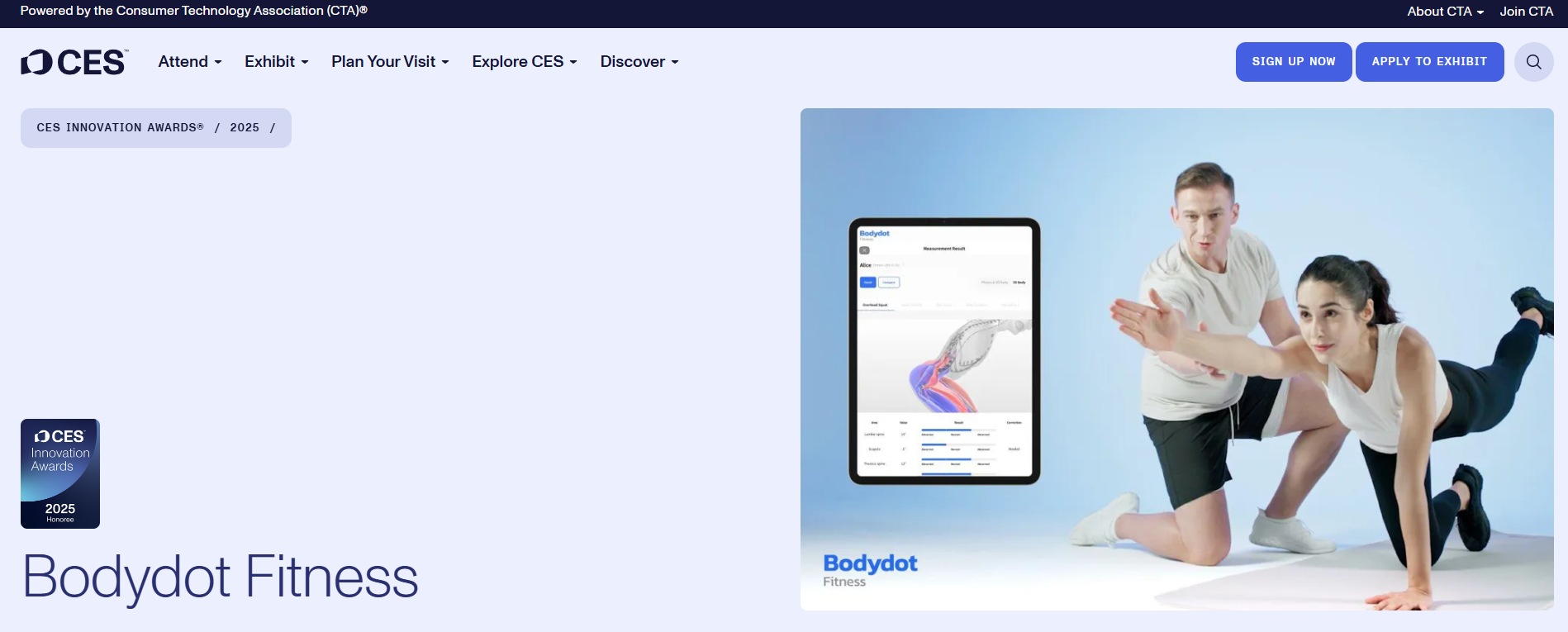
In 2025, Bodydot was recognized with the CES 2025 Innovation Award in the Fitness category — one of the most respected technology accolades in the world.


Team Elysium Inc. has been developing AI-based body assessment technology since 2017. Bodydot is the result of years of clinical R&D, field validation, and continuous model refinement.
The New Standard for Fitness Consultations
The question isn't whether AI body analysis is better than traditional methods.
The question is: how long can your center afford to rely on a method that leaves accuracy on the table?
Members who experience Bodydot's assessment don't forget it. The data speaks — and it speaks in a language every member understands.
Ready to Upgrade Your Center's Assessment?
Bodydot fits into any consultation workflow in 60 seconds flat, requires only 1.5 meters of floor space, and comes with full installation, training, and software support.
Contact us today to schedule a demo or start your online consultation.