A Body Composition analyzer measures what's inside the body — weight, body fat, and muscle mass
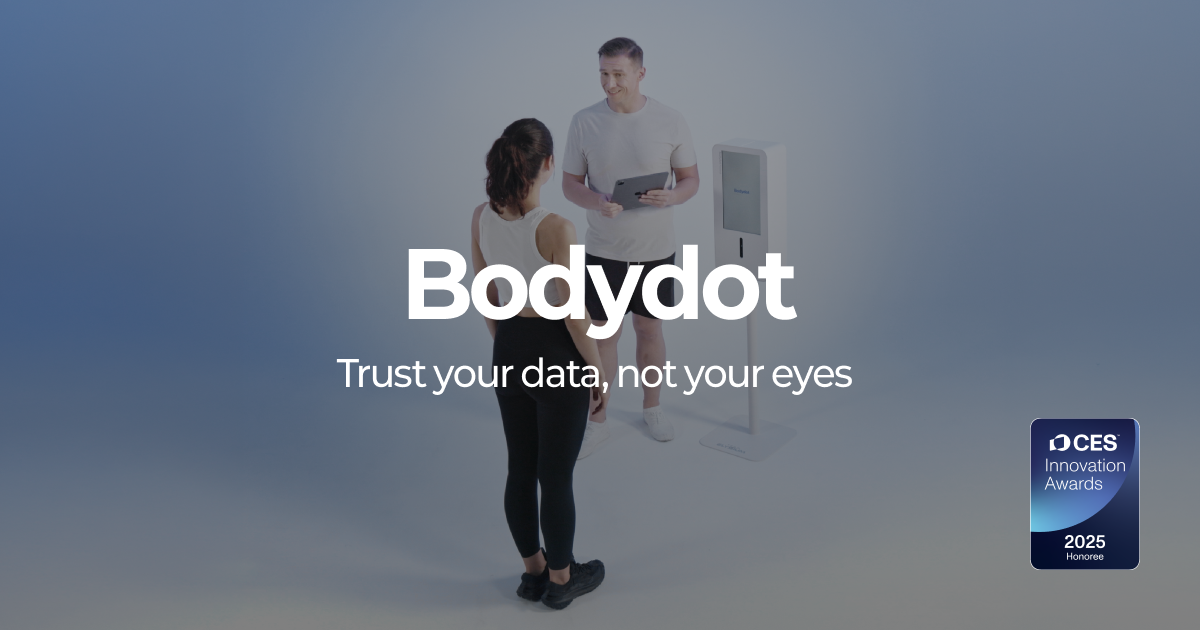
While an AI Body Analyzer such as Bodydot measures the body's external posture, alignment, and movement.
"Isn't that just the same thing?
Here's what actually happens in most first conversations. It rarely starts with a facility owner weighing "we already have a body composition analyzer, so do we really need this too." It starts a step earlier than that — with us having to explain that the two aren't the same thing to begin with.
Most owners have never had a reason to treat "what's inside the body" and "how the body is aligned" as two separate categories — both just get filed under "body analysis." So the first job in almost every conversation isn't comparing price or features. It's establishing that these are two different measurements in the first place.
That's also why the honest answer to "do we need both" only makes sense once the distinction is clear. Not every facility needs both — but you can't judge that until you know what each one is actually measuring.
They answer different questions
A body composition analyzer answers "what is this body made of." An AI body analyzer answers "how is this body aligned and moving." Neither is an upgrade of the other — they're built to answer different questions, which is why "we already have a body analysis tool" isn't quite the right way to frame the decision.
Category | Body Composition Analyzer | Bodydot / AI Body Analyzer |
Core purpose | Measures weight, body fat, and muscle mass | Analyzes posture, alignment, and movement |
What it measures | Weight, body fat %, skeletal muscle mass, body water, BMI | Body shape, posture, left-right balance, joint angles, forward head posture, pelvic tilt, etc. |
Method | Bioelectrical impedance analysis (BIA) — requires electrode contact | AI + 3D camera-based scan — non-contact |
Measurement time | Approx. 30 sec – 1 min | Approx. 30 sec |
Clothing / hygiene | Barefoot, electrode contact required | Non-contact — can measure fully clothed |
Result format | Numerical and graph-based report | Visual report with images, angles, and alignment data |
Primary use | Diet management, tracking weight and body fat changes | Posture correction, explaining pain causes, exercise prescription basis |
Consultation conversion | Easy to track body composition changes over time | Higher first-consultation persuasion, higher PT/Pilates conversion |
Center differentiation | Most centers already have one | Strong differentiator — few centers have adopted it yet |
Error factors | Hydration, meals, and time of day have significant impact | Posture-recognition environment (lighting, distance, etc.) |
Best suited for | Diet, gym, and weight-management centers | Public fitness, Pilates, rehabilitation, postural correction, functional training |
When a body composition analyzer alone is enough
If any of these describe your facility, you may not need an AI body analyzer yet:
- Your consultations center on weight loss and diet, not posture or pain
- Most members' goals are body-fat or muscle-mass targets, with no complaints about alignment or discomfort
- You run group classes or open-gym access rather than individualized PT programming
In these cases, adding a second device isn't the highest-priority investment — figuring out whether your consultation flow actually needs it comes first.
When it starts mattering
- PT- and Pilates-centric facilities: if the core of your consultation is convincing a member why they need a specific program, a body-fat percentage alone doesn't make that case. "Your pelvis is tilted forward" backed by a visual scan does.
- Members with pain but normal body composition: a body composition analyzer has no way to explain discomfort in someone whose fat and muscle numbers look fine. Alignment data does.
- First-impression-driven sign-ups: a visual, interactive scan tends to leave a stronger impression in an initial consultation than a purely numerical report — which is also why it functions as a differentiator (few competing centers have adopted it yet, per the table above).
This lines up with where Bodydot is actually used: public fitness centers, Pilates studios, rehab centers, postural-correction and functional-training programs — not primarily diet-focused facilities.
❗A quick checklist❗
We struggle to explain why a specific exercise is necessary, beyond "your numbers say so"
We have members with normal body composition who still report pain or discomfort
Our services are built around individualized PT or Pilates programming, not just weight tracking
Improving first-consultation conversion is a real priority for us
Consultation quality varies noticeably between trainers
Three or more checked, and a body composition analyzer alone is likely leaving something on the table.
❓FAQ❓
Does having a body composition analyzer make an AI body analyzer unnecessary?
No. They measure different things — a body composition analyzer measures what's inside the body, while Bodydot measures posture, alignment, and movement outside the body.
What's the actual benefit of using both together?
Combining body composition data with posture and alignment data gives members a more complete picture of their condition, which tends to increase trust in a trainer's program recommendations.
Does a diet-focused center need an AI body analyzer?
Not necessarily. If weight loss is the only goal, a body composition analyzer alone may be sufficient — an AI body analyzer becomes more relevant once posture- or pain-related consultations increase.
How long does a Bodydot scan take?
Approximately 30 seconds, from scan to exercise-prescription output.
How accurate is Bodydot?
Bodydot has 97.0% accuracy across 40 measurement items, based on an AI model trained on 165,000+ musculoskeletal data points.
Do I need to remove my shoes or touch the device?
No. Unlike bioelectrical impedance devices, which require barefoot electrode contact, Bodydot is non-contact — members can be scanned fully clothed.
The Bottom Line
Having a body composition analyzer doesn't automatically make an AI body analyzer redundant — they answer different questions. But that doesn't mean every facility needs both. Use the checklist above to see whether your consultations are already running into the specific gap Bodydot is built to close.