Gyms measure posture with anything from simple manual tools — visual observation, posture grids, tape measures, and goniometers — to smartphone posture apps and AI-based 3D body analyzers that measure alignment automatically in seconds.
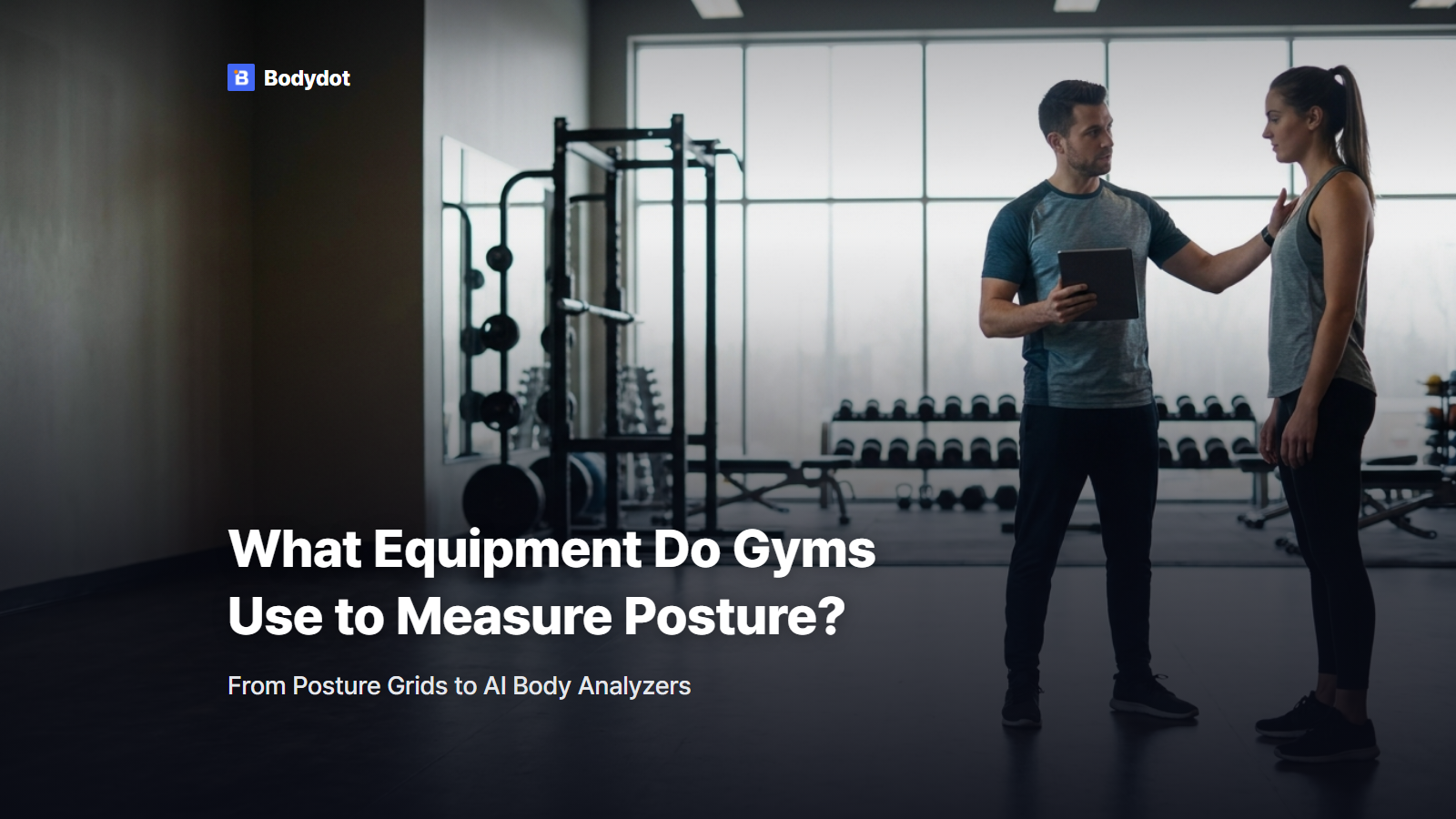
Why gyms measure posture at all
A posture assessment gives trainers a starting point: where a member is misaligned, which muscles need work, and what to track over time. It also gives the member a concrete reason to start a program. The tool a gym uses determines how fast that assessment is, how easy it is to explain, and whether it can be repeated reliably.
The common options
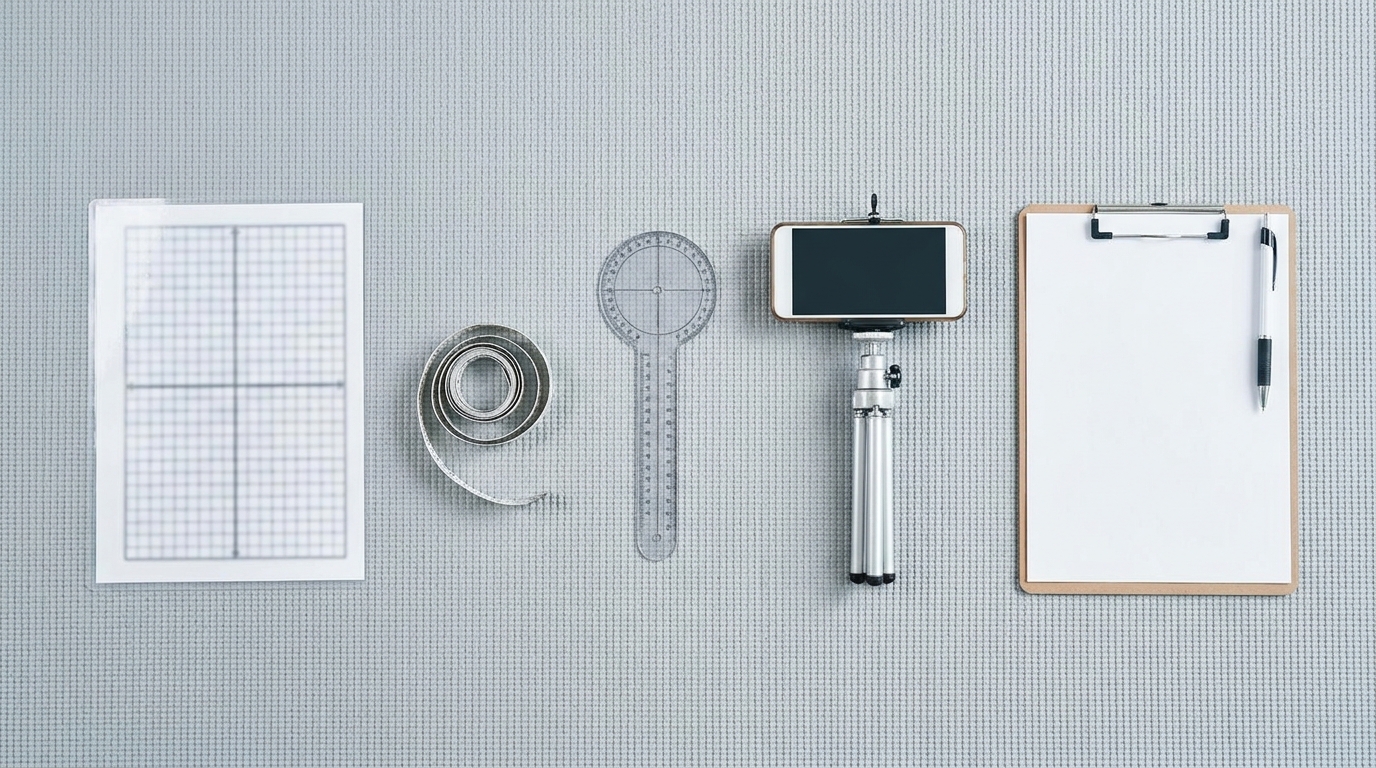
Visual observation and posture grids
A trainer observes the member standing in front of a grid or plumb line and notes deviations like uneven shoulders or a forward head. It costs almost nothing, but results depend heavily on the trainer's eye and experience.
Tape measures and goniometers
Hand tools for measuring lengths and joint angles. They're precise in skilled hands, but taking several measurements adds time, and small differences in where the tool is placed can change the result.
Smartphone and tablet posture apps
Apps that analyze a photo of the member. They're affordable and portable, but results can vary with camera angle, distance, and lighting.
Body composition analyzers
Common in gyms, but they measure weight, body fat, muscle mass, and body water — not posture. They're useful alongside a posture tool, not as a replacement for one.
AI-based 3D body analyzers
Dedicated devices that combine a 3D camera with AI to measure posture and alignment automatically. Bodydot is one example: it measures 40 items in about 30 seconds, applies the same standard every time, and produces a visual report the member can understand at a glance.
Side-by-side comparison
Option | Measures posture? | Speed | Consistency | Easy for members to understand? |
Visual observation / posture grid | Yes | Quick, but depends on trainer | Varies by trainer | Limited |
Tape measure / goniometer | Yes, point by point | Slower with multiple measurements | Varies with tool placement | Numbers only |
Posture app | Yes, from photos | Quick | Varies with camera setup | Moderate |
Body composition analyzer | No | Quick | Affected by hydration, meals, time of day | Numbers and graphs |
AI + 3D body analyzer, e.g. Bodydot | Yes — 40 items | About 30 seconds | Same AI standard every time, 97.0% accuracy | Visual report with images and angles |
How to choose for your gym
- If you mostly run open-gym memberships with few one-on-one assessments, manual tools or an app may be enough to start.
- If PT and first consultations drive your revenue, speed and a report members can understand matter more — the assessment is part of your sales conversation.
- If you want to show progress over time, consistency matters most. A measurement that changes with who takes it makes before-and-after comparisons hard to trust.
- If you already have a body composition analyzer, remember it answers a different question. Pairing it with a posture tool gives members a fuller picture.
FAQ
What equipment do gyms use to measure posture?
Common options include visual observation with a posture grid, tape measures and goniometers, smartphone posture apps, and AI-based 3D body analyzers such as Bodydot.
Does a body composition analyzer measure posture?
No. It measures weight, body fat, muscle mass, and body water. Posture and alignment need a separate posture assessment tool.
How long does an AI posture scan take?
With Bodydot, about 30 seconds from scan to exercise prescription.
Why do manual posture measurements vary?
Results depend on the trainer's eye and on exactly where tools are placed, so two measurements of the same person can differ slightly.
How accurate is Bodydot?
Bodydot has 97.0% accuracy across 40 measurement items, based on an AI model trained on 165,000+ musculoskeletal data points.
Bottom line
Gyms measure posture with everything from a posture grid to AI-based 3D body analyzers. Manual tools are low-cost but depend on the trainer; body composition analyzers don't measure posture at all; AI-based analyzers like Bodydot trade a higher upfront investment for speed, consistency, and a report members understand. The right choice depends on how central assessment is to your consultations and your PT business.