You may already have an opinion about posture analysis
If you've looked into posture analysis before, there's a good chance you already have a fixed idea about it: it takes a while, and the numbers seem to shift depending on who's measuring.
That assumption usually isn't about any specific product — it's about the category itself, shaped by experience with manual measurement long before any AI-based option came along.
If you've relied on manual measurement in the past, this assumption is probably even more solid.
But this assumption is worth examining more closely. The idea that "posture analysis = slow and inconsistent" isn't a limitation of posture analysis as a concept — it comes from a specific measurement method.
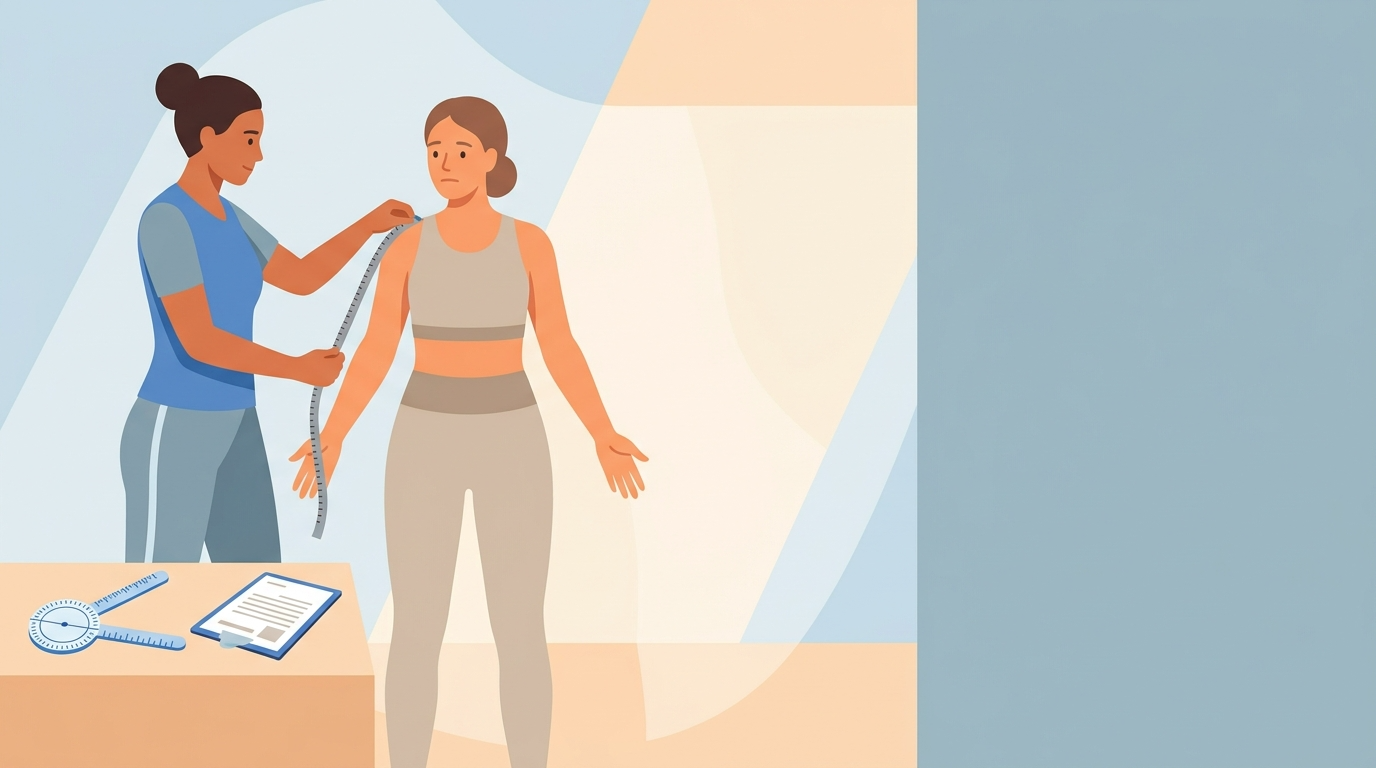
Picture a typical scene: a new member comes in for a consultation. A trainer holds up a tape measure to check shoulder height, uses a goniometer to check pelvic tilt, and records observations by eye. The member just stands there and waits. Only once the measuring is done does the real conversation — why this specific exercise is necessary — actually begin. Three months later, a different trainer measures the same member again, and the numbers come back similar but not quite the same.
From the member's side, the natural question is:
"Last time you said this, so why is it different now?”
Why does manual measurement produce different numbers?
This isn't a matter of a particular trainer's skill. Any measurement done by hand carries a margin of error — that's a structural limitation of the method itself, not the person using it.
Even the same trainer measuring the same member again will get slightly different results depending on where the tape lands, how the member is standing, and even the lighting and sightline that day. This is known as intra-rater variability, a well-documented issue in clinical settings. Add a different trainer into the mix, and inter-rater variability compounds it. Even when two people are trained to the same standard, the exact point where they visually judge a landmark — where a shoulder line "starts," for instance — can never be perfectly identical.

How does AI keep "the same standard" every time?
Bodydot's AI model, trained on 165,000+ musculoskeletal data points, measures 40 items against the same standard every single time. Instead of a human eye estimating a reference point, a 3D camera recognizes body coordinates and a fixed algorithm calculates angles and alignment — so the same standard applies no matter who's operating the device or how many times someone is measured. That consistency is what produces the 97.0% accuracy figure.
In other words, whether it's one trainer this month or a different one next month, the baseline the member sees on the report doesn't change.
So is AI measurement 100% perfect?
Honestly, no. Scan conditions — lighting, loose clothing — can affect the outcome of any measurement method to some degree. What Bodydot is actually claiming isn't "flawless under all conditions," but consistency: under the same conditions, the same result comes out no matter who's operating it. That's the fundamental difference from manual measurement — manual methods vary by person even when conditions are identical, while AI measurement stays the same across people as long as conditions are controlled.
Manual measurement vs. AI-based posture analysis
Category | Manual Measurement | AI-Based |
Method | Tape measure, goniometer, direct observation | 3D camera + AI, fully automated |
Inter-/intra-rater variability | Can vary by person and by session | Same AI standard applied — 97.0% accuracy |
Time required | Multiple steps: setup, measuring, recording | 30 seconds, scan to exercise prescriptio |
Recording | Manual notes, needs separate organizing | Automatic report, stored in the cloud (자동 리포트, 클라우드 저장) |
New-trainer readiness | Quality depends on individual skill level | Same data quality regardless of experience |
Re-measurement reliability | Hard to explain differences from last time | Same baseline every time — clear before/after |
How the consultation itself actually changes
Looking back at the scene above, manual measurement spends a large share of consultation time on the measuring itself.
With Bodydot, that order flips. The 30 seconds a member spends in front of the device covers both the scan and the exercise prescription, which frees up the rest of the consultation for explaining, using the report, why a given program is necessary. The conversation shifts from disputes over a number to a discussion grounded in data.
This matters even more for facilities that also run remote consultations. Because results are shared through the same cloud-based software, there's no need to wonder whether an in-person measurement from last time and a remote one this time were taken to the same standard.

Bottom line
The assumption that posture analysis is slow and inconsistent isn't wrong — it's just not a limitation of posture analysis as a concept. It's a structural limitation of measuring by hand.
Once measurement shifts to a method that applies the same standard every time, both problems — time and inter-rater variability — get resolved together, and the center of gravity in a consultation shifts from "measuring" to "explaining and persuading.”
👉 Want to see how a consultation changes with Bodydot in your facility?